


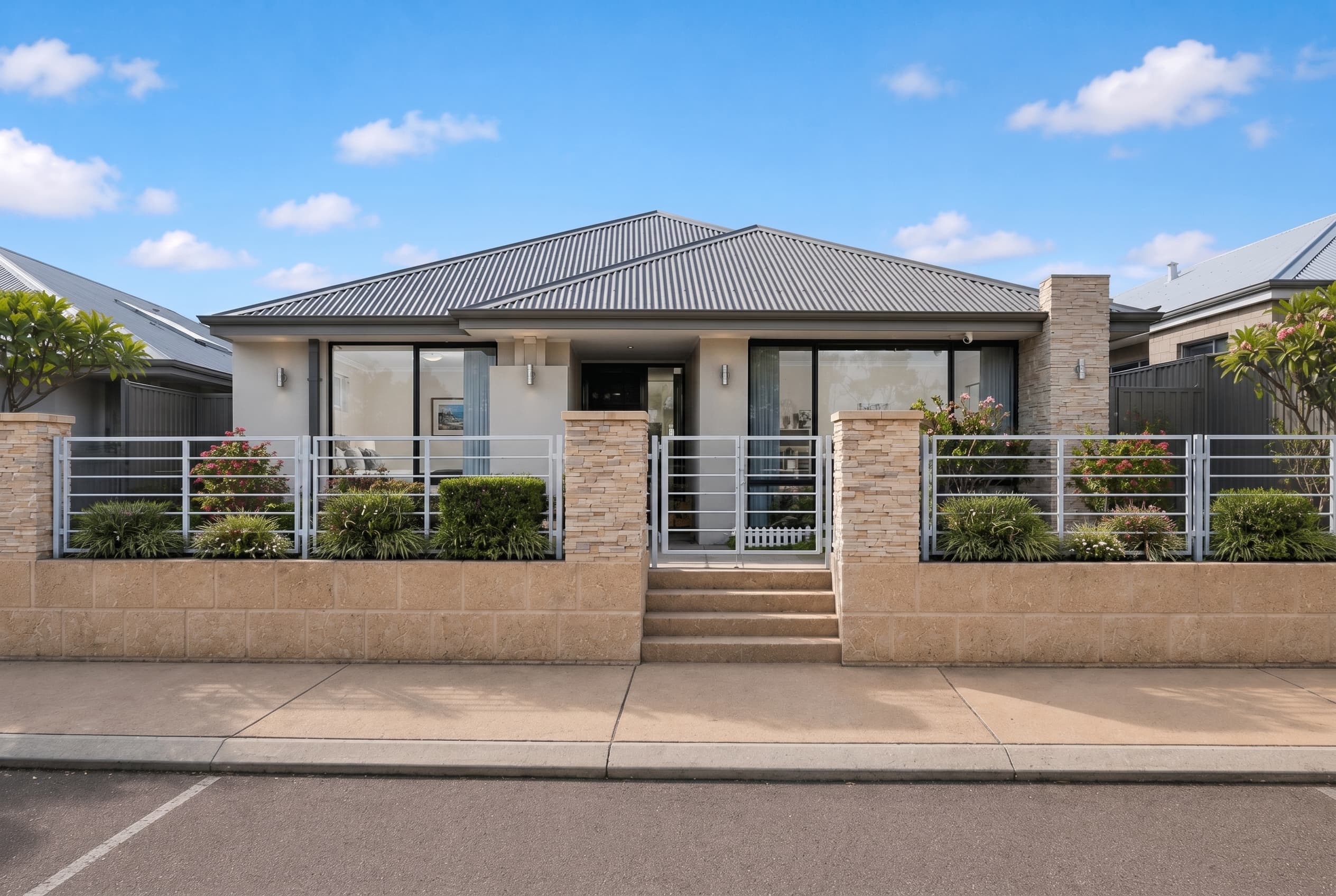
In May a seller in Byford spent four hours cleaning her house for a Saturday home open. Then she ran the home open herself. She knew what mattered about that house in a way no agent standing at the door does. I have stood at a lot of front doors waving people through. She did the job better than I would have.
The house at 24 McLachlan Turn had an accepted offer in 13 days and settled at $885,000. She declined an $820,000 offer on the way and negotiated directly with the couple who bought it. Good people doing a fair deal, and no one paid 2.5% for the privilege. They used KeyHive Guided: they handled inspections and negotiation; we handled the listing, contract and conditions.
Selling your own house is legal in WA. WA Consumer Protection says so, and no licence is needed. Legal is not the hard part. An agent's commission buys about six weeks of campaign work, and the decision is whether you want that job. This guide is what the job involves, from someone who does it for a living.
The job you take on, and the one you don't
Most sellers picture the agent handling the legal side. They don't. A licensed settlement agent transfers the title, lodges documents, adjusts rates and deals with the banks, and you engage one whether or not you use a selling agent. What the selling agent actually does is the campaign. When you sell privately, the campaign is yours and the settlement side does not change.
Who does what
Your campaign, your settlement agent's transfer
| You | Settlement agent |
|---|---|
| Price and presentation | Title transfer and lodgement |
| Listing, enquiries, home opens | Rates and water adjustments |
| Negotiating price and conditions | Lender and conveyancer coordination |
| Signing the O&A | Settlement day |
Engage the settlement agent before offers arrive, not after. WA Consumer Protection recommends one unless you are a qualified lawyer yourself.
Paperwork first, two weeks before you list
Order your Certificate of Title from Landgate and check the title type. Strata and survey-strata sellers must give buyers the precontractual disclosure statement required by the Strata Titles Act 1985 before they sign, using Landgate's strata forms. Miss it and the buyer can delay settlement or walk away.
Buy the Offer and Acceptance contract and the Joint Form of General Conditions from the REIWA shop and read them once before an offer lands. Our WA contracts guide goes through the form clause by clause.
Then the things that block settlement when left late: RCDs, smoke alarms, pool barriers, and an ATO clearance certificate. The certificate is free, takes weeks, and without it the buyer has to withhold 15% of your sale price at settlement.
Price from what sold, not what you need
Find five to eight sales of homes like yours within a couple of kilometres from the last six months. Sold prices, not asking prices. REIWA's sold results and the portals' sold sections are free. Then adjust honestly for what they had and you don't, because the buyers will.
WA has no prescriptive underquoting regime like NSW or Victoria, so fixed price, price range and offers are all open to you. The Byford sellers listed at offers above $820,000, which put them in the search filters they wanted and gave them room to say no to the first offer. A free appraisal gives you a licensed agent's number to weigh against your own.
Photos, and getting onto the portals
The Byford seller took her own photos on an iPhone. They were as good as the professional set we had shot, and in a couple of rooms better. If you can hold a phone level, declutter, and shoot in the late afternoon, you can do this. If you can't, $300 to $500 buys a professional set with a floor plan. Our photography guide covers the rest.
Getting the listing seen is the part that surprises people. realestate.com.au and Domain only accept listings from licensed agencies, so you cannot upload one yourself. A private-sale platform will list it under their licence for $900 to $2,500 and forward the enquiries. An agency-supported sale such as KeyHive Guided lists it under ours and adds contract handling. Either way, check the portal tier: a standard listing sits well below the premium tier agents pay for, and our vendor-paid advertising guide shows what that gap costs.
A signboard ($150 to $350) still pulls local buyers in Perth suburbs, and the suburb Facebook group is free.
Enquiries and home opens: the part you are better at
Reply to every enquiry the same day. Buyers may be comparing several homes, and a prompt answer helps them plan an inspection. Ask each one whether they have spoken to a lender and whether they need to sell first. You are working out who to spend your weekend on.
For the home open: 30 to 45 minutes on a Saturday, advertised a week ahead, house spotless, a printed sheet by the door with price, inclusions, rates and strata fees, and a register every visitor signs. Have a second adult there. Let people walk through without commentary, answer questions honestly, and "I'll find out" is always an acceptable answer. Do not misrepresent the property; check anything you are unsure about before giving an answer.
Then follow up every visitor within a day. That conversation helps you identify serious buyers, answer outstanding questions and understand what might be holding an offer back.
Offers, the O&A and the path to settlement
Every offer goes on the O&A form in writing, with deposit, settlement date and every condition filled in. "We'd go to nine-twenty" over the fence is a conversation, not an offer.
Read the conditions before the price. A 21-day finance clause, a building inspection and a subject-to-sale condition can turn a strong number into a two-month wait that collapses. Counter in writing on the same form, change only what you need to, and give a short deadline. If two buyers are interested, tell both and ask for best offers by a set time. Our guide to making an offer shows the same form from the buyer's side.
The deposit goes into a settlement agent's or solicitor's trust account, never your own. After signing, diarise the finance and inspection deadlines and work with your settlement agent throughout. Settlement takes place on the date, or within the period, agreed in your contract. Becoming unconditional does not automatically start a new settlement countdown. Our settlement guide covers that window.
What it costs and what you keep
For illustration, a 2.5% commission including GST on a $938,000 sale is $23,450, before any separately charged marketing. The private campaign items below total $1,050 to $3,350. Settlement agent costs of $1,200 to $2,500 apply whichever selling method you choose. Compare campaign costs and commission separately from those shared costs; actual savings depend on your quotes and inclusions.
Cost comparison
Typical private-sale outlay in Perth
| Listing pathway | $900–$2,500 |
|---|---|
| Photography and floor plan | $0–$500 |
| Signboard | $150–$350 |
| Settlement agent (shared cost) | $1,200–$2,500 |
| Total of listed items | $2,250–$5,850 |
Run your own price through the commission calculator, and see what Perth agents charge in our agent fees guide.
Three ways to sell a house in WA
The decision is rarely private sale versus full commission. It is how much of the campaign you want to keep. Line them up.
Side by side
Private platform, KeyHive Guided, traditional agent
Private platform
- Portal listing
- Under their licence
- Enquiries and home opens
- You
- Negotiation
- You
- Contract and conditions
- You and your settlement agent
- Cost
- $900 to $2,500 plus your outlay
KeyHive Guided
- Portal listing
- Under ours, campaign launched
- Enquiries and home opens
- You, with seller tools
- Negotiation
- You, agent on call
- Contract and conditions
- KeyHive
- Cost
- $2,500 at launch plus $2,500 at settlement
Traditional agent
- Portal listing
- Agent, often billed as VPA
- Enquiries and home opens
- Agent
- Negotiation
- Agent
- Contract and conditions
- Agent
- Cost
- About $23,450 plus marketing
| Service | Private platform | KeyHive Guided | Traditional agent |
|---|---|---|---|
| Portal listing | Under their licence | Under ours, campaign launched | Agent, often billed as VPA |
| Enquiries and home opens | You | You, with seller tools | Agent |
| Negotiation | You | You, agent on call | Agent |
| Contract and conditions | You and your settlement agent | KeyHive | Agent |
| Cost | $900 to $2,500 plus your outlay | $2,500 at launch plus $2,500 at settlement | About $23,450 plus marketing |
Where private sales lose money
- Pricing from what you need, not what sold. Overpricing can prolong a campaign and lead to a price reduction.
- Replying to enquiries tomorrow. Buyers may be comparing several homes. A prompt reply makes it easier to secure an inspection.
- Reading the price before the conditions. A clean offer with finance pre-approved is often worth more than one $10,000 higher with a subject-to-sale clause.
- Vague special conditions. "Subject to satisfactory inspection" can leave room for dispute. Get expert help to specify the inspection, deadline and what happens if an issue is found.
- Leaving compliance and the ATO certificate until the end. Both become settlement blockers when the buyer is ready and you are not.
Before you go live
- Confirm your title type: green title, strata, survey-strata or other.
- Order a Certificate of Title through Landgate.
- Engage a settlement agent before serious offers arrive.
- Get the O&A form and the Joint Form of General Conditions.
- If strata, prepare the precontractual disclosure statement.
- Apply for your ATO clearance certificate. Each seller on title needs one, and without it the buyer must withhold 15% of the price.
- Check RCDs, smoke alarms and pool barriers.
- Compile rates notices, approvals and warranties into one buyer pack.
- Confirm a trust account for the deposit.
- Choose a listing pathway and read the inclusions line by line.
- Write down your walk-away price before the first enquiry.
FAQ
Frequently asked questions
Can I sell my house privately in WA?
Yes. You do not need a licence to sell a property you own, and WA Consumer Protection confirms owners can sell without appointing an agent. You run the campaign; a licensed settlement agent handles the legal transfer.
What do I need to sell my house myself?
A Certificate of Title, the WA Offer and Acceptance contract with the Joint Form of General Conditions, a settlement agent engaged before offers arrive, a strata disclosure statement if the property is strata, an ATO clearance certificate, current rates notices, compliant RCDs, smoke alarms and pool barriers, decent photos, and a licensed pathway onto the portals.
Can I list on realestate.com.au without an agent?
Not directly. The portals only accept listings from licensed agencies, so a private seller needs a private-sale platform or an agency-supported option such as KeyHive Guided to get the listing up.
How long does it take to sell privately in WA?
Time to find a buyer varies with price, presentation and market conditions. Settlement takes place on the date, or within the period, agreed in your contract. Allow two to three weeks of preparation first. The Byford sale in this guide had an accepted offer 13 days after listing.
Does WA have a cooling-off period?
WA has no automatic cooling-off period for an ordinary residential property sale. Once both parties sign the Offer and Acceptance and acceptance is communicated, the contract is binding, subject to its conditions and any applicable statutory rights. Finance and inspection protections should be written into the contract.
What does a private seller have to disclose in WA?
WA has no general vendor disclosure statement. Answer questions honestly and do not misrepresent the property. Strata and survey-strata sellers must give the precontractual disclosure required by the Strata Titles Act 1985. Ask your settlement agent or solicitor what disclosures apply to your property.
Who holds the deposit in a private sale?
Not you. WA Consumer Protection says the deposit in a no-agent sale should go into the trust account of a settlement agent or solicitor. Name the holder in the O&A before anyone signs.
How much does selling privately cost?
Allow a rounded budget of $2,500 to $6,000 for a listing pathway, photos, a signboard and a settlement agent, based on the illustrative costs below. Settlement costs apply whether you sell privately or use an agent. Compare campaign costs and commission separately, using GST-inclusive quotes; your actual savings depend on the services you buy.
Related Articles

Real Estate Agent Fees Perth 2026: Traditional vs Fixed Fee Compared
On Perth’s current comparison price, a traditional 2.5% commission plus $3,000 marketing is about $29,250. Compare every fee model side by side, including KeyHive Modern Agent at $10,500 total inc GST with the standard campaign included.

How to Make an Offer on a House in Perth: The WA O&A Explained
Making an offer in WA means signing a binding contract, the Offer and Acceptance. Here is how price, deposit, and conditions actually work, and why there is no cooling-off period once it is signed.

Fixed Fee vs Commission Perth: The No Incentive Myth Debunked
Fixed fee vs commission: which is better for Perth sellers? We debunk the “no incentive” myth and reveal what actually drives a higher sale price in WA.
If you want the job but not all of it
The Byford sellers used KeyHive Guided. They ran the home opens and the negotiation. We listed the home under our licence, launched the campaign, prepared the contract and tracked the conditions through to settlement. The fee is $5,000 in total: $2,500 at launch and $2,500 at settlement. If that split sounds like the one you want, that is what it is for.