


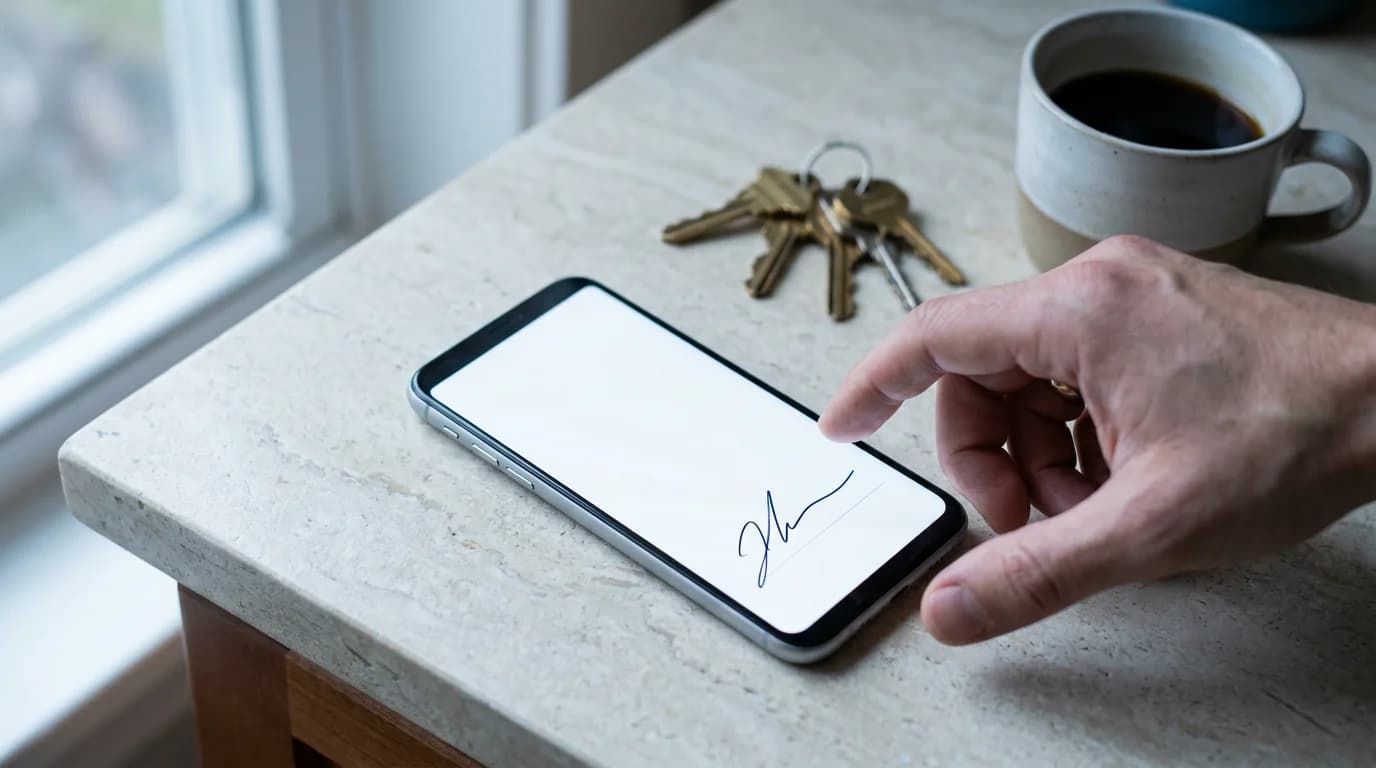
You signed the agency agreement on your phone. Between school pickup and dinner. Four pages, DocuSign, done.
If your agent uses REIWA's standard residential exclusive agency agreement, it may be described as Form 109. REIWA updates its forms, so the clause numbers in your copy may differ from an earlier version.
Before you listed your home, you agreed to everything in it.
Here's what that actually means.
Overview
What this article covers
- PeriodThe lock-in period and how long you're committed
- FeeWhat "introduced" means and why it's written broadly
- CostsMarketing costs and your trust account
- TailThe tail - how commission can apply after the agreement ends
- BuyerWhether you pay if you find your own buyer
- SwitchingThe double-fee scenario
The part most sellers miss
Sole and exclusive agency are two arrangements you may encounter. Other selling arrangements also exist, and the label is less important than the terms written into your agreement.
Sellers sometimes assume they can find their own buyer without paying commission, but an exclusive agency agreement may say otherwise.
Sole agency
You find your own buyer
Commission may not apply
Exclusive agency: Form 109
You find your own buyer
Commission may still apply
Check whether the title of your agreement says “exclusive agency”, then read the selected options and special conditions.
Here are the key terms and what they can mean for you.
The lock-in
The agreement states the start and end dates of the exclusive period. Read those dates carefully rather than relying on what is described as “standard”.
During that period, appointing another agent or selling privately may still leave you liable for fees under the agreement. The exact consequences, including any termination fee, depend on the terms you signed and the circumstances. Review the termination provisions and get advice before changing agents.
The period is negotiable. Most people don't negotiate it.
This is why agents push so hard to get the agreement signed at the first meeting. Before you sign, they are competing for your business. They're responsive. They're available. They're selling you on their service.
After you sign, the agreement may protect their fee for the full exclusive period even if you become unhappy with the service. The dynamic changes completely.
When the agent earns their fee
The agreement explains when the agent earns the selling fee. REIWA forms have used the concept of the agent being an effective cause of the sale when defining whether a buyer was introduced. Whether that test is met depends on the agreement and what actually led to the sale. The High Court considered the effective-cause test in LJ Hooker Ltd v WJ Adams Estates (1977).
Case note
West Property Solutions t/as Century 21 West Property Group v Lewis
An agent ran advertising, held open homes, and negotiated contract terms with a buyer. The exclusive appointment expired before contracts were signed. The seller then engaged a second agent who finalised the deal with the same buyers on the same terms.
The first agent sued for commission. The initial tribunal dismissed the claim, but the appeal tribunal overturned that decision. The agent had introduced the buyers. The sale proceeded from that introduction. The seller paid commission to both agents.
In practice, advertising, a home open or a direct introduction can form part of an agent's claim. It does not follow that any one of those steps automatically makes the agent the effective cause.
If a buyer:
- sees your listing online
- attends a home open
- then contacts you directly
…the agent can argue they were the effective cause. They ran the advertising and held the home open. Whether that is enough depends on the agreement and the full chain of events leading to the sale.
If that buyer sends a friend or family member instead, the agent may still argue that the selling-fee terms apply. The result turns on the wording and the connection between the agent's work and the eventual sale.
There is one protection worth knowing about. If you appoint a new agent after the exclusive period ends and the new agent is entitled to a fee, some versions of the REIWA agreement say the original agent will not be entitled to a selling fee under the relevant introduction and post-expiry terms. Check that protection exists in your version. It only applies after the exclusive period.
Marketing costs and your trust account
Before your property goes live, the agent may ask for money upfront for marketing. This is known as vendor-paid advertising (VPA). The amount varies widely depending on what services you choose. It could be $1,000 or it could be $5,000.
That money goes into a trust account. The agent can only invoice you for costs actually incurred. Unused funds must be returned.
If you pull the property off the market early or terminate the agreement, you must reimburse all expenses already spent. But you're not liable for the full amount. Only what was actually used.
The risk is that most of the marketing spend happens early: photography, floorplan, and property website listing fees. By the time you realise you want to switch agents, most of it has already been spent.
What catches sellers off guard is the total cost. The VPA you pay upfront is separate from the commission you pay at settlement. On the Perth median sale (~$1,050,000), you're looking at thousands in marketing plus 2.5% commission at settlement. And you don't always know exactly where the marketing money went.
There is also no cooling-off period for agency agreements in WA. Once you sign, the written authority is legally binding, subject to its terms and applicable consumer law.
Read more about how VPA works, what it should cost, and what to ask for.
The tail
This one catches people off guard.
If a buyer is introduced during the agreement period and later buys the property within the tail period written into the agreement, the agent may still claim commission. Entitlement depends on the signed terms and whether the contractual requirements are met; it is not automatic merely because the buyer saw the property earlier.
There's a date field that controls how long this applies for. Most sellers never notice it. Make sure it is discussed and completed before you sign.
Do not assume there is a standard tail period or that a blank field will operate in your favour. Check the selected option and any date entered. A long date can extend the potential claim well beyond the working relationship.
This is negotiable. Ask what the tail period is, ask for it to be reasonable, and make sure you see the selected option and date before you sign.
Want to see what a transparent agency agreement looks like?
You find the buyer, you may still pay
Some versions of the agreement present this as a choice:
The seller WILL or WILL NOT be liable for commission if they introduce the buyer themselves. Your version may express the same issue differently.
If “WILL” is selected, you pay full commission either way.
You find the buyer → you still pay.
On the Perth median sale price (~$1,050,000 at 2.5%), that's around $26,250. For a conversation you might have had yourself.
Ask for “WILL NOT” before you sign. Many agents will push back. This term directly protects their commission and there's little incentive on their side to remove it. How they respond tells you something about how the rest of the relationship will go.
The double fee scenario
If you appoint another agent during the exclusive period and they sell the property:
The first agreement may treat that as a termination.
Which means:
- You may owe the first agent a termination amount or selling fee
- You may also owe the second agent their fee
Case note
Double commission - switching agents mid-campaign
A seller signed an exclusive agency agreement. A few weeks in, they were unhappy with the agent's performance and engaged a second agent. The second agent found a buyer and completed the sale.
The first agent claimed their full commission. The exclusive period was still running when the seller switched. Appointing a second agent during that period is treated as a termination of the first agreement, triggering a termination fee equal to the full selling fee.
The seller paid commission to both agents. On a median Perth sale, that's $15,000-$40,000 to each side. These Queensland and NSW examples illustrate the potential exposure, but a WA dispute will turn on the executed agreement, the facts and applicable WA law.
What this looks like in practice
What we've seen
A family from our kids' school in Hammond Park came to us.
They had already signed with another agent. Paid marketing. A few weeks in, they weren't happy and wanted to switch.
They couldn't.
If the house sold, the original agent would still be entitled to commission. If they switched, they risked paying two fees.
On a ~$700k home, that's easily $15k–$20k wasted.
They stayed where they were. Not because they wanted to, but because the contract gave them no choice.
At KeyHive, we use exclusive agency agreements too. The difference: one fixed fee, no percentage commission, and we'll do shorter lock-in periods if you want them.
You have more leverage than you think
The commercial terms highlighted in this article can be discussed before signing. The agent wants your listing. Before you sign, you have leverage. Use it.
Here's what you can negotiate:
- Keep the lock-in reasonable. For a typical Perth campaign, an initial exclusive period longer than 90 days is difficult to justify. Ask why the agent needs more time before you agree to it.
- Seller-introduced buyer. Ask the agent to select the option that means you will not pay commission on a buyer you find yourself. Expect pushback. This term protects their fee. Ask anyway.
- Shorter tail period. Ask for 30 days instead of 90. Check the date field before you sign.
- Itemised marketing costs. Ask for a line-by-line breakdown of what the VPA covers. Know what you're paying for before the money leaves your account.
If the agent says “it's all standard” and won't discuss changes, that tells you something about how they'll treat you during the campaign.
FAQ
What to ask before you sign
How long is the exclusive period?
The agreement should state the start and end dates. The period can be discussed before signing, so read the actual dates and ask for a period you are comfortable with rather than accepting a duration described as standard. For a typical Perth campaign, question why an initial exclusive period longer than 90 days is necessary.
What does “introduced” mean in practice? Where do you draw the line?
“Introduced” may be defined by the agreement by reference to whether the agent was an effective cause of the sale. If a buyer sees your listing online, attends a home open, then contacts you directly, the agent may still argue that their work led to the sale. The answer depends on the wording you signed and the facts of the transaction.
What happens to marketing costs if I stop early? How much is at risk?
Marketing costs vary widely depending on what services you choose. They could be $1,000 or $5,000. The money goes into a trust account. The agent can only invoice you for costs actually spent. Unused funds must be returned. But most marketing spend happens early (photography, signboard, property website fees), so by the time you want to switch, most of it has been used. There is no cooling-off period for agency agreements in WA.
What is the tail period? How long after the agreement ends can a fee still apply?
The agreement may include a date field that limits how long a fee can apply after the exclusive period ends. If a buyer introduced during the agreement later purchases, the agent may still be entitled to commission if the signed terms and the facts support the claim. Check the selected option and date before signing; do not assume a standard period.
If I find my own buyer, am I still paying commission?
It depends on the seller-introduced buyer term in your agreement. Some versions use “WILL” or “WILL NOT” options. If your agreement makes you liable, you may owe commission even if the agent had no involvement. On the Perth median sale price (~$1,050,000 at 2.5%), that's around $26,250. Ask for the option that excludes commission on a buyer you find yourself before you sign.
If the answer is “it's all standard,” that usually means it hasn't been questioned.
Read it before you sign it
REIWA Form 109 is a standard contract. Standard doesn't mean neutral. It means it was written by the industry, for the industry.
Understand what you're agreeing to. Once signed, the agreement is generally binding, but enforceability and termination rights depend on the contract, the circumstances and applicable law. Get legal advice if there is a dispute.
Before you sign, make sure you understand what you'll actually pay in agent fees, and whether you want an agent at all: our guide to selling privately in WA covers the no-agent route. If you want a KeyHive appraisal before committing, start here: See what my property is worth.
Sources
REIWA publishes standard selling agency agreements for its members, but the wording and numbering can change between versions. Always read the agreement you have actually been given. For REIWA's current general guidance, see reiwa.com.au. For your rights as a seller, see Consumer Protection WA's guidance at consumerprotection.wa.gov.au.
Cases referenced: LJ Hooker Ltd v WJ Adams Estates Pty Ltd (1977) 138 CLR 52 (HCA: the foundational effective cause ruling); West Property Solutions v Lewis (No 2) [2015] QCATA 66 (Qld: double commission after agent introduction survived appointment expiry).
Related Articles

Fixed Fee vs Commission Perth: The No Incentive Myth Debunked
Fixed fee vs commission: which is better for Perth sellers? We debunk the “no incentive” myth and reveal what actually drives a higher sale price in WA.

How to Sell Your House Privately in WA: The Perth Guide (2026)
Selling your house privately in Perth or WA? Step-by-step guide to pricing, listing on the portals, home opens, the Offer and Acceptance, settlement, real costs and where private sellers come unstuck.

Buying the Listing: Why Perth Agents Inflate Appraisals
“Buying the listing” is when agents inflate appraisals to win your business, then walk the price down. Here is how to spot it and protect yourself in Perth.
Ready to sell smarter?
One fixed fee. No percentage commission. No surprises at settlement.