


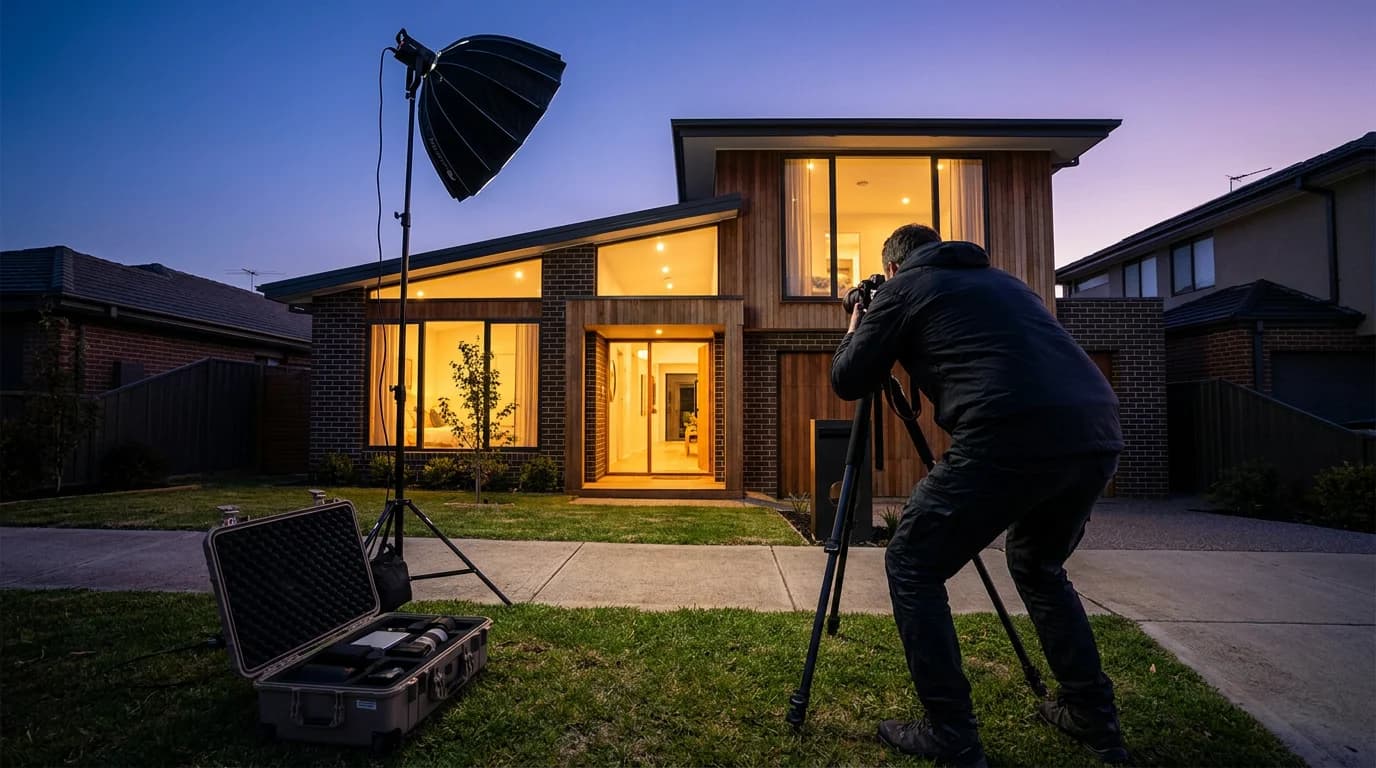
Most Perth sellers expect to pay commission when their home sells. Few expect a separate marketing invoice that arrives before the first buyer walks through the door.
These are real estate advertising fees, known in the industry as Vendor-Paid Advertising, or VPA. They cover photography, your listing on realestate.com.au, a signboard, and the floor plan. In Perth, a mid-tier package runs $3,000 to $5,500. Premium packages exceed $10,000. The cost lands on top of commission, not inside it.
To work out the commission part of your budget, enter your sale price and quoted rate in our real estate commission calculator. Add any separately quoted advertising costs to that amount.
What most sellers aren't told: this money is collected upfront, before your campaign starts, and it's yours to lose whether or not your home sells.
Paid Upfront, Before the Campaign Starts
In Perth, the standard process works like this: you sign the agency agreement, the agent books the marketing package, and usually within the first day or two you receive an invoice for the advertising costs. You pay it upfront.
Under WA law, that money goes into the agent's statutory trust account, required under the Real Estate and Business Agents Act 1978. The agent then draws from trust to pay suppliers: the photographer, the signboard company, REA. The trust account protects you from misappropriation, but it doesn't protect you from the spend itself. Once you've paid the photographer and the listing is live on REA, those funds are gone.
If you can't pay upfront, some agents offer to advance VPA costs on your behalf through services like CampaignAgent (which REA Group acquired in 2021). CampaignAgent charges interest and recovers its advance at settlement. One company now profits from where you list, how prominently you appear, and how you pay for it.
What the REIWA Form Actually Says
The REIWA exclusive agency agreement (Form 109) contains an advertising schedule where the agent lists each item and its cost, and you authorise the total spend. The operative clause reads, in substance:
The seller authorises the agent to incur advertising and marketing expenses in accordance with the schedule attached to this agreement. The seller shall pay such expenses to the agent on demand. These costs are payable whether or not the property is sold, leased, or otherwise disposed of.
Three things in that clause most sellers miss:
- “On demand” means the agent can invoice you at any point, including before the campaign ends or before the property sells.
- “Whether or not the property is sold” means if you withdraw the listing, receive no offers you can accept, or terminate the agent, you still owe the marketing costs.
- After 30 days unpaid, the agent can charge 9% per annum interest on the outstanding amount.
The same form, in a separate clause, explicitly states that agents may choose not to charge separately for marketing at all. Sellers are almost never told this.
What a Typical Package Costs
A mid-tier VPA package in Perth in 2026:
Typical package
Indicative Perth VPA costs
| Item | Typical cost |
|---|---|
| Professional photography | $300–$600 |
| Floor plan | $150–$350 |
| REA Premiere listing (30 days) | $1,500–$3,500 |
| Signboard | $150–$400 |
| Mid-tier total | $3,000–$5,500 |
Every item looks reasonable on its own. Ask who it actually serves. Before committing to VPA, you can start here: See what my property is worth.
Who Each Line Item Benefits
Photography. Your property looks better. Fair enough. But your agent also uses those photos in their own marketing materials, social media, and profile listings. You paid for the shoot. They get the content.
REA Premiere listing. REA claims Premiere generates “up to 2.2 times more email enquiries than Standard.” That's REA's own figure, from their own sales materials. No independent Australian study confirms Premiere produces higher final sale prices. In Perth's current market, median days on market is nine to ten days, and more than 90% of properties sell at or above asking price. A 30-day Premiere block often expires long after your home has already sold.
The bulk subscription gap. Many Perth agencies run a bulk subscription with REA, buying Premiere slots at wholesale. What they charge you is retail. If every listing on an agency's REA profile appears as Premiere, they almost certainly bought bulk. The gap between what they paid and what they charged you is unregulated margin they aren't required to disclose.
Signboard. Displays the agent's name, phone number, and brand on your street for the duration of the campaign. The REIWA form asks sellers to agree to pay for advertising costs associated with the agent's branding requirements. Most sellers tick this without reading it. You're funding the agent's street-level advertising.
Home opens. Every buyer who walks through your door is captured for the agent's database. Future listings. Future commissions. The home open serves two purposes: selling your property, and building the agent's pipeline.
How Much Does It Cost to Advertise on realestate.com.au?
A 30-day Premiere listing on realestate.com.au typically costs $1,500 to $3,500 for a Perth metro property, depending on suburb and duration, and top-tier placements reach $5,000 or more. Private sellers cannot buy a listing directly: realestate.com.au only accepts listings through a licensed agency subscription, so the fee reaches you as a line item in your agent's advertising schedule, often with an undisclosed margin added.
The trajectory matters as much as the price. In 2009, a standard listing on realestate.com.au cost approximately $75. REA raises fees above CPI every year, routinely 10% per annum, with instances of 30% in a single year. Their tier ladder keeps extending: Standard, Feature, Highlight, Premiere, Premiere All, Premiere+, and Luxe, which launched in July 2024 at almost double the price of Premiere+.
The ACCC has issued a Section 155 Notice (a compulsory information demand) to REA Group over pricing concerns. The investigation is ongoing as of April 2026. No findings have been published.
The Disclosure Gap
WA's Code of Conduct requires agents to disclose in writing any rebate, discount, or commission received from an advertising supplier, and to obtain the client's written consent. Consumer Protection WA has specifically flagged advertising schemes where agents receive benefits proportionate to spend as a conflict requiring disclosure.
The structural gap: the Code covers rebates received from suppliers. It doesn't cover the markup between what the agent pays REA under their bulk subscription and what they charge you. The agent might be charging $2,500 for a listing slot they bought wholesale for $800. They don't have to tell you the difference.
FAQ
Five Questions to Ask Before You Agree to VPA
Is marketing included in your commission, or charged separately?
REIWA's own form says it can be either. If the agent says VPA is standard, ask them to show you where the form says it's mandatory. It doesn't.
Can I see a written breakdown of what you pay each supplier versus what you charge me?
Photography, signboard, REA listing, line by line. If the agent won’t provide this, ask why.
Does your agency buy bulk Premiere packages from REA?
If every listing on their profile appears as Premiere, you already know the answer. Ask what they pay per listing under their subscription, and what they’re charging you.
What happens to my marketing spend if the property doesn't sell?
Under REIWA's standard terms, you owe it all back on demand. Make sure you understand this before signing.
Are there any rebates, commissions, or volume discounts you receive from any supplier involved in my marketing?
WA's Code of Conduct says they must disclose these. Ask directly.
One Number, Known Upfront
Photography and REA listings matter. But the model is worth understanding: upfront, non-refundable, often marked up, and separate from commission. The costs are yours. The benefits spread wider. For the full picture on selling costs, see the full breakdown of Perth agent fees.
KeyHive Modern Agent includes a standard campaign in its fixed $10,500 inc GST total. You pay $2,500 to launch the listing and $8,000 at successful settlement. It is not a percentage of your sale price. Any optional work outside the included campaign must be agreed separately before you incur it.
Related Articles
Fixed Fee vs Commission Perth: The No Incentive Myth Debunked
Fixed fee vs commission: which is better for Perth sellers? We debunk the “no incentive” myth and reveal what actually drives a higher sale price in WA.

How to Sell Your House Privately in WA: The Perth Guide (2026)
Selling your house privately in Perth or WA? Step-by-step guide to pricing, listing on the portals, home opens, the Offer and Acceptance, settlement, real costs and where private sellers come unstuck.
Buying the Listing: Why Perth Agents Inflate Appraisals
“Buying the listing” is when agents inflate appraisals to win your business, then walk the price down. Here is how to spot it and protect yourself in Perth.
Ready to sell smarter?
One fixed fee. No percentage commission. No surprises at settlement.