



Overview
What this guide covers
- 01The documents that matter before and after a buyer appears
- 02The five stages of a standard WA sale
- 03The compliance, cost, and settlement issues sellers miss most often
- 04The official organisations and resources worth using directly
The Three Documents That Matter
WA property sales run on standardised forms. Two of them are usually signed before a buyer even appears.
Document 1
Agency agreement (appointment to act)
This is usually REIWA Form 109. It covers the commission model, lock-in period, marketing costs, and whether you still pay if you find your own buyer.
Most sellers sign it quickly without reading it. That is why we wrote a clause-by-clause breakdown.
Document 2
Offer and Acceptance (O&A)
The O&A covers price, deposit, settlement date, inclusions/exclusions, and special conditions. It sits alongside the Joint Form of General Conditions.
The separate contracts guide explains the clauses in more detail.
Document 3
Common conditions
- Finance clause: buyer can exit if finance is not approved in time.
- Building and pest clause: buyer can negotiate or exit if defects are serious enough.
- Subject to sale: buyer must sell their own property first, which adds more risk for you.
The Selling Process, Start to Finish
Five stages. Most of the complexity sits in preparation and in the contract-to-settlement period. The rest is mostly execution.
Stage 1
Preparation
This is where sellers either create leverage or create expensive problems for themselves later.
Property prep
- Declutter and deep clean
- Fix the small visible issues first
- Improve garden and street presentation
- Organise professional photos.
Legal compliance
- Install the required RCDs
- Check smoke alarm compliance
- Confirm fence and pool compliance where relevant
- Sort any obvious disclosure issues early
Common mistakes at this stage are exactly the ones covered in the 12 costly mistakes guide.
Stage 2
Choosing an agent and listing
Before the property goes live, you sign the agency agreement. That document often matters more than sellers realise because it locks in the commercial relationship before a buyer appears.
- Negotiate the lock-in period before signing.
- Check whether you still pay if you find your own buyer.
- Understand the upfront marketing costs and the tail period.
- Compare the fee model carefully using the fixed fee vs commission guide.
Stage 3
Home opens and offers
Once the listing is live, serious interest in Perth often shows up within two to four weeks if the property is priced and presented well.
- Judge offers on conditions, timing, deposit strength, and buyer circumstances, not just price.
- A clean offer is often better than a slightly higher but heavily conditional one.
- Be wary of pressure tactics that feel like buying the listing.
Stage 4
Contract to settlement
Once the O&A is signed by both parties, it is legally binding. The settlement period is commonly 30 to 90 days depending on the deal.
What happens
- Buyer satisfies finance and inspection conditions
- Settlement agents prepare transfer documents
- Banks arrange mortgage discharge and new lending
- Final adjustments are calculated
Your tasks
- Appoint your settlement agent
- Notify your bank if the property is mortgaged
- Arrange moving and utility changes
- Review the settlement statement before the day
The separate contracts and settlement guides go deeper on this stage.
Stage 5
Settlement day
Ownership transfers, most settlements happen electronically through PEXA, and your settlement agent handles the legal side.
Your main job is to have moved out, handed over the keys, and made sure the administrative loose ends were handled before the day.
Legal Requirements Before You List
These apply whether you use an agent or run your own sale. Get them sorted early, because compliance problems often surface too late.
Compliance
Safety compliance
- At least two RCDs must be installed. An electrician can usually handle this for well under $300.
- Homes built before 1997 need compliant smoke alarms, usually mains-powered unless wiring is impractical.
- Pool and spa barriers must meet current requirements before settlement can proceed.
Disclosure
What you should disclose
WA is still a buyer-beware market, but sellers cannot mislead buyers or stay silent on known material facts.
- Structural issues or major defects
- Flooding, drainage, or contamination concerns
- Asbestos presence or unapproved works
- Boundary disputes, encroachments, or nearby developments you already know about
What It Actually Costs to Sell
Most sellers budget for commission and forget the rest. The real cost picture is wider than the headline agent fee.
Agent commission
- Notes
- Around 2.5% traditionally, or a fixed fee. See the 2026 Perth agent fee comparison for the full breakdown.
- Typical range
- $8,000-$21,000+
Marketing (VPA)
- Notes
- Photography, REA listing, signboard, and other upfront marketing costs
- Typical range
- $2,000-$5,500
Settlement agent
- Notes
- Conveyancer or solicitor for the legal paperwork
- Typical range
- $800-$1,500
Mortgage discharge
- Notes
- Bank fee to release the title
- Typical range
- $150-$400
Compliance work
- Notes
- RCDs, smoke alarms, and pool compliance where needed
- Typical range
- $200-$500
Capital gains tax
- Notes
- Usually relevant only for investment properties
- Typical range
- Varies
Key Organisations
These are the organisations that show up repeatedly in WA property transactions.
Organisation
REIWA
- Creates standard contract forms and related guidance
- Publishes market data and suburb statistics
- Sets industry standards and training expectations
Organisation
Landgate
- Maintains official ownership records
- Registers property transfers
- Provides title searches and property information
Organisation
WA Consumer Protection
- Licenses real estate and settlement agents
- Handles complaints about agents
- Publishes consumer guidance and official requirements
Organisation
PEXA
- Enables most electronic settlements in WA
- Connects banks, settlement agents, and Landgate
- Makes same-day digital settlement possible in most cases
WA Property Glossary
Plain English explanations of terms you'll encounter when selling property in Western Australia.
Official Resources
Use official government and industry sources whenever you need the live rule set rather than a general explanation.
Resource
WA Consumer Protection
Official guide to property contracts and seller rights.
Resource
Transfer Duty Calculator
Official WA Government duty calculator.
Resource
First Home Owner Rate
Duty concessions for eligible first-home buyers.
Resource
Appointment to Act Guide
Requirements for legally appointing an agent.
Related Articles
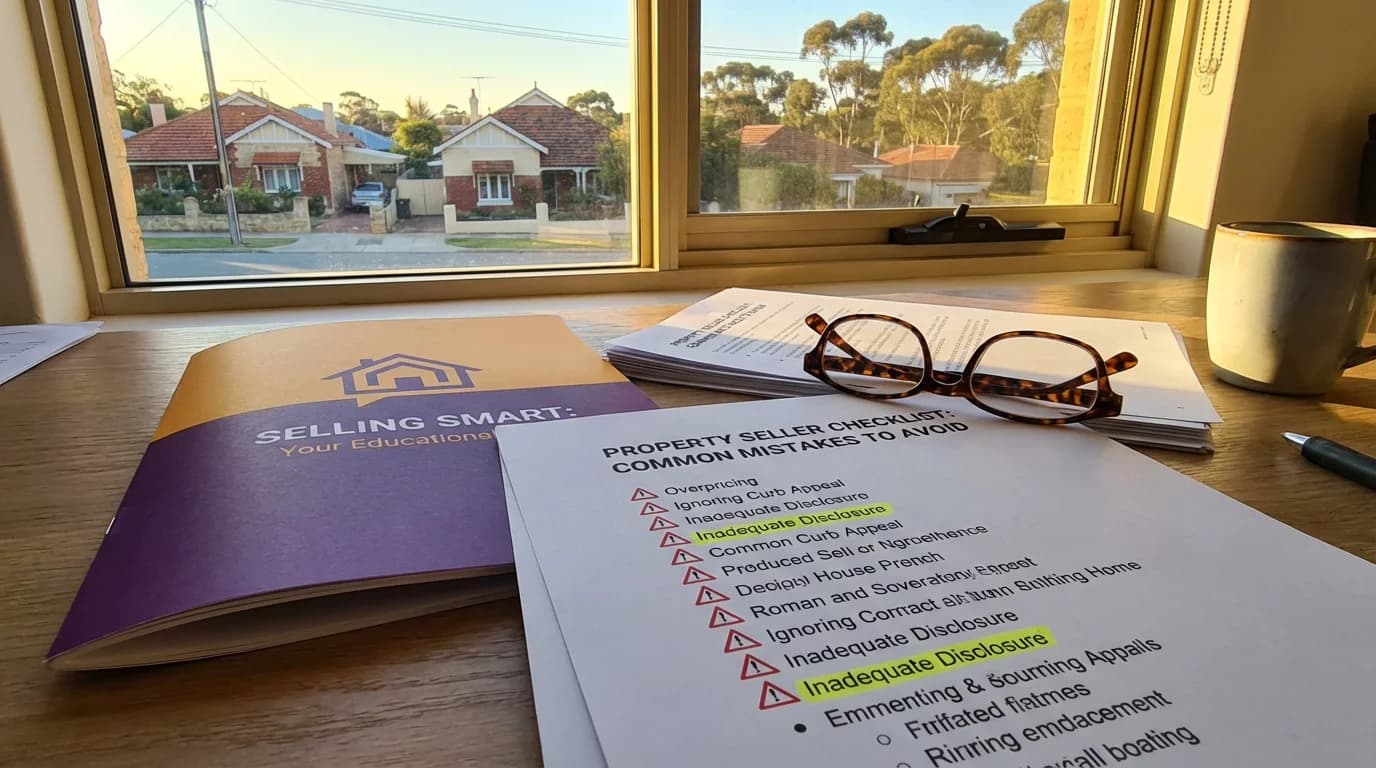
12 Property Sale Mistakes That Cost Perth Sellers Thousands
Overpricing, bad photos, emotional negotiations, skipping legal review. These 12 mistakes cost Perth sellers thousands. Learn what to avoid before you list.

Fixed Fee vs Commission Perth: The No Incentive Myth Debunked
Fixed fee vs commission: which is better for Perth sellers? We debunk the “no incentive” myth and reveal what actually drives a higher sale price in WA.

WA Property Contracts: What Every Seller Needs to Know
WA property contracts follow standardised formats, not mysterious documents only agents understand. Here’s what every key clause actually means.
Ready to sell smarter?
One fixed fee. No percentage commission. No surprises at settlement.